Ibogaine Methadone
An independent look at the high-risk, high-interest intersection of ibogaine and methadone — what the combination does to the heart, how a safe transition is actually sequenced, and where the evidence and the law stand.
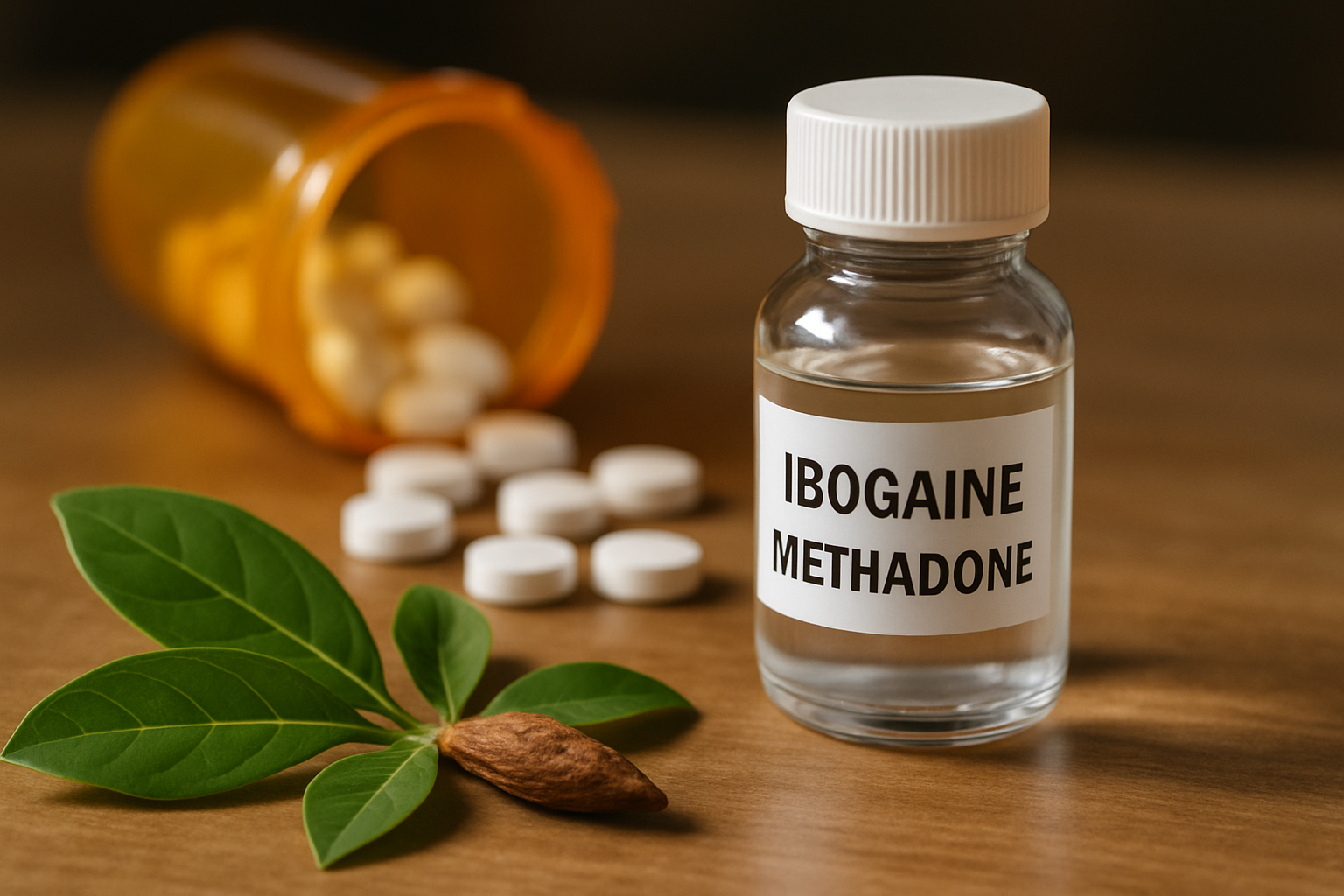
Few decisions in addiction care carry as much promise and peril at once as moving from methadone to ibogaine. Methadone maintenance is a guideline-supported therapy that keeps hundreds of thousands of people stable and alive; ibogaine is an experimental, one-session detox that some describe as a reset. Putting them together, or moving between them carelessly, is where the danger lives.
Both drugs act on the heart’s electrical system, and both linger in the body — methadone for days, ibogaine through its long-acting metabolite noribogaine. Overlap them and the risk of a dangerous heart rhythm rises sharply. That single fact shapes every responsible protocol: taper, wait, screen, monitor.
This Ledger exists to lay that out plainly — benefits, uncertainties and hard limits — so readers can ask clinicians better questions. It is not medical advice, and it is not a do-it-yourself guide.
“Stability is not just a number; a stable methadone dose is a life scaffold. Any change demands careful medical supervision and a plan tailored to the individual.”Editorial perspective — harm reduction first
Why the heart decides everything
Combining ibogaine and methadone can push the QT interval — a measure of the heart’s electrical recovery — beyond a safe window, raising the risk of arrhythmias such as torsades de pointes. There is also a documented danger of severe respiratory depression if ibogaine is introduced while substantial methadone remains in the body.
How a safe transition is ordered
A prudent transition never overlaps the two drugs. It staggers them: a clinician-run methadone taper over weeks to months, a verified washout so residual opioid levels fall, and only then consideration of supervised ibogaine treatment. Clinically oriented comparisons such as how ibogaine and methadone detox differ in practice lay out the contrasting timelines and safety measures.
What ibogaine may — and may not — do
Ibogaine modulates opioid, serotonin and dopamine systems, and observational cohorts report rapid drops in opioid withdrawal scores. One summary notes attenuation of withdrawal reaching clinically significant improvements in select cohorts; see peer-reviewed findings on withdrawal attenuation. The evidence base remains limited to small studies and early trials. Full guide: the evidence →
Where the law stands
Schedule I at home; supervised programs abroad
Ibogaine is a Schedule I substance under U.S. federal law, so it is not an approved domestic treatment. People who pursue it generally travel to supervised programs in jurisdictions where it is legal. A 2026 federal executive order accelerated psychedelic research but did not reclassify ibogaine. Full guide: legality & cost →
Frequently asked questions
What are the specific dangers of combining ibogaine and methadone?
The chief dangers are QT-interval prolongation and arrhythmias — both drugs affect cardiac conduction, so their effects can compound — plus severe respiratory depression if ibogaine is given while methadone levels remain high. This is why cardiac screening, electrolyte checks, ECG monitoring and qualified medical supervision are treated as non-negotiable.
How long should someone be off methadone before considering ibogaine?
Timelines vary with dose and metabolism, but a gradual, clinician-run taper over weeks to months, followed by a verified washout, is the general approach. During washout, teams track withdrawal, blood pressure, heart rate and ECG before anything else. See our guide to timing.
Is ibogaine a legal treatment for methadone addiction in the U.S.?
No. Ibogaine is a Schedule I substance under U.S. federal law and is not an approved treatment domestically. Some people seek supervised programs abroad; see legality and cost.
Can ibogaine completely eliminate methadone withdrawal?
Reports suggest it can markedly reduce withdrawal for some people, but complete elimination is not guaranteed and responses vary. Outcomes improve with structured aftercare and relapse prevention.